Beyond Slips and Falls: Understanding Business Risks in the Digital Age
When most business owners think about liability insurance, they picture someone slipping on a wet floor or getting hurt on their property. But personal injury advertising injury coverage protects against a completely different set of risks – ones that can be just as costly and far more common in today’s connected world.
What Personal and Advertising Injury Coverage Includes:
- Personal Injury Claims: False arrest, wrongful eviction, libel, slander, invasion of privacy, malicious prosecution
- Advertising Injury Claims: Copyright infringement, misappropriation of advertising ideas, slogan theft, trade dress violations
- Coverage Type: Typically included as “Coverage B” in Commercial General Liability (CGL) policies
- Protection Scope: Legal defense costs, settlements, and judgments up to policy limits
The reality is stark: a single social media post criticizing a competitor, using someone’s photo without permission, or accidentally copying another business’s slogan can trigger a lawsuit. These aren’t physical injuries – they’re violations of personal rights and intellectual property that can result in significant financial damages.
Unlike bodily injury claims that involve medical bills and physical harm, personal and advertising injury claims center on reputational damage, privacy violations, and intellectual property infringement. For Victorville businesses operating in our digital marketplace, these risks are everywhere – from your website content to your social media presence to your traditional advertising campaigns.
I’m Ryan McEachron, and as CEO of ISU-ARMAC, I’ve helped countless local businesses steer the complexities of personal injury advertising injury coverage over my decades in the insurance industry. Understanding these protections isn’t just about compliance – it’s about safeguarding your business’s reputation and financial future in an increasingly litigious world.

Similar topics to personal injury advertising injury:
- commercial general liability coverage guide
- business liability quote
- public liability insurance cover
What is Personal and Advertising Injury Coverage?
Picture this: you post a product review on social media that mentions a competitor, or you use what you think is a free image on your website. Suddenly, you’re facing a lawsuit – not for someone getting hurt at your business, but for damaging someone’s reputation or using their intellectual property without permission. This is where personal injury advertising injury coverage becomes your financial lifeline.
This protection lives within your Commercial General Liability (CGL) policy as something called “Coverage B.” While most business owners know their CGL policy covers slip-and-fall accidents, Coverage B handles the invisible threats – the claims that can hit your wallet just as hard as any physical injury case, but without anyone needing a bandage.

The beauty of this coverage is that it comes standard with most CGL policies and Business Owner’s Policies (BOPs). You’re not paying extra for a luxury – you’re getting essential protection that recognizes how modern businesses actually operate. Whether you’re running a small shop in Apple Valley or managing a growing company across Southern California, your daily activities create these risks simply by existing in today’s connected world.
What makes personal injury advertising injury coverage different from your regular liability protection? It’s designed specifically for non-physical injuries – the kind that hurt someone’s reputation, privacy, or business rights rather than their body. These claims can emerge from everyday business activities like marketing campaigns, social media posts, tenant interactions, or even casual conversations about competitors.
The “Personal Injury” Component Explained
When insurance companies talk about “personal injury” in this context, they’re not referring to broken bones or medical bills. Instead, they mean violations of someone’s personal rights that don’t involve physical harm. Think of it as protection against claims where you’ve crossed a line you didn’t even know existed.
False arrest, detention, or imprisonment covers situations where your business wrongfully restricts someone’s freedom. This often happens in retail settings – imagine your security guard detains someone they suspect of shoplifting, but it turns out the person was innocent. That’s a lawsuit waiting to happen, and this coverage handles it.
Malicious prosecution protects you if someone claims you initiated or continued legal action against them without good reason and with harmful intent. While less common than other claims, business disputes can sometimes escalate to this level.
For business owners who rent out space, wrongful eviction or entry coverage is crucial. If you’re a landlord in Oak Hills and you change the locks on a tenant who claims they’ve caught up on rent, you could face a wrongful eviction lawsuit.
The defamation protections – libel and slander – are increasingly important in our social media world. Libel covers written false statements (think online reviews, emails, or social posts), while slander handles spoken ones. A casual comment about a competitor during a sales meeting could become a slander claim if it’s untrue and damages their business.
Invasion of privacy rounds out the personal injury protections. This covers various ways you might violate someone’s right to privacy, from sharing private information about customers to using someone’s photo without permission. In our digital age, privacy violations can happen more easily than you might think.
The “Advertising Injury” Component Explained
The advertising side of personal injury advertising injury coverage focuses specifically on harm caused by your marketing and promotional activities. This protection has become essential as businesses expand their advertising reach through websites, social media, and digital marketing.
Misappropriation of advertising ideas means borrowing too heavily from another company’s marketing concepts. It’s not just about stealing a jingle – it could involve adopting the overall look and feel of a competitor’s successful campaign.
Copyright infringement is probably the most common advertising injury claim today. Every time you use an image, piece of music, or written content in your advertising, you risk infringing on someone’s copyright. That stock photo you thought was free? The background music in your promotional video? These can all trigger expensive lawsuits.
Slogan and trade dress infringement protect against claims that your advertising mimics another business’s protected slogans or distinctive visual appearance. Trade dress includes things like unique packaging designs or store layouts that customers associate with a particular brand.
Violation of privacy during advertising specifically applies when privacy violations occur in your marketing context. Using someone’s photo in an advertisement without their consent is a classic example that can lead to significant damages.
The key difference between personal and advertising injuries comes down to context. Personal injuries typically arise from general business operations and interactions, while advertising injuries stem specifically from your promotional activities. Both can be equally costly, and both are essential protections for any business with a public presence.
Understanding Your Coverage for Personal Injury Advertising Injury
When it comes to personal injury advertising injury coverage, many business owners are surprised to learn just how broadly their policy defines “advertisement.” The Insurance Services Office (ISO) casts a wide net, describing it as any notice that’s broadcast or published to the general public or a specific market segment about your goods, products, or services for the purpose of attracting customers or supporters.
This definition extends far beyond traditional TV commercials or billboard advertisements. Your broadcast or published notices include everything from radio spots and newspaper ads to those colorful flyers you hand out at local events. But here’s where it gets interesting for modern businesses: your social media posts absolutely count as advertisements under most policies. That Instagram story showcasing your latest product or that Facebook post celebrating a customer success? They’re all considered advertising materials.
Your websites and blogs fall under this umbrella too. Every product description, customer testimonial, and blog post you publish is viewed as advertising content by your insurance policy. The same goes for direct mail campaigns – those brochures and postcards you send to potential customers – and all your marketing materials from business cards to the design of your storefront.
Essentially, if you’re putting information out there to attract customers to your Victorville business, your policy likely considers it advertising. This broad scope is actually good news because it means you have coverage in more situations than you might expect.
Common Examples of Covered Claims
Let me paint you a picture of how this coverage works in real-world scenarios. These are the kinds of situations that keep business owners up at night, but with proper personal injury advertising injury protection, you can sleep a little easier.

Picture this: you launch a clever new advertising campaign with a catchy slogan and eye-catching design. A few weeks later, a competitor sues for a similar ad campaign, claiming you’ve stolen their marketing concept. Even if the similarities are coincidental, you’ll need legal defense, and that’s exactly what your coverage provides.
Here’s one that happens more often than you’d think: using a copyrighted photo in a blog post without permission. Maybe you grabbed an image from a Google search for your company blog, not realizing it was copyrighted. The photographer or stock photo company finds the unauthorized use and demands payment or files a lawsuit. Your policy steps in to handle the legal costs and potential settlement.
Sometimes businesses get a little too competitive in their advertising. If a negative comment about a rival in a radio ad leads to a slander lawsuit, your coverage protects you. Even if you thought you were just highlighting your strengths, if you cross the line into making false statements about a competitor, you could face legal action.
For property owners, a landlord being sued for wrongful eviction is a classic example of personal injury coverage in action. If you own commercial property and need to evict a tenant, but don’t follow proper legal procedures, that tenant might sue for wrongful eviction. This isn’t about physical harm – it’s about violating someone’s legal rights.
What’s particularly tricky in today’s connected world is when an employee posts negative comments on social media that get traced back to your business. Even if they were posting on their personal account, if the comments disparage a client or competitor and can be linked to your company, you might face a libel claim.
These examples show that claims often arise from honest mistakes or misunderstandings rather than malicious intent. That’s what makes this coverage so valuable – it protects you even when you didn’t mean any harm.
How Does This Differ from Errors & Omissions (E&O) Insurance?
This is where things get interesting, and frankly, where a lot of business owners get confused. Both personal injury advertising injury coverage and Errors & Omissions insurance protect against lawsuits, but they’re defending against completely different types of problems.
Your personal injury advertising injury coverage focuses on specific violations like libel, slander, copyright infringement, or invasion of privacy that typically stem from your marketing and communication activities. It’s about protecting someone’s reputation, privacy, or intellectual property rights.
Errors & Omissions insurance, on the other hand, covers claims when your professional advice or services cause financial harm to a client. If a marketing consultant gives bad advice that costs a client money, or a web designer creates a website that doesn’t work properly, E&O insurance responds to those professional negligence claims.
For certain businesses, the lines between these coverages can blur significantly. Advertising agencies, marketing consultants, web designers, publishers, broadcasters, journalists, law firms, accountants, architects and engineers, and real estate agents often face risks that overlap both areas. In many cases, these professionals need specialized E&O policies that provide more comprehensive coverage for risks that might be excluded from a standard Commercial General Liability policy.
If your business provides professional advice or services, it’s worth having a conversation with us about whether your standard personal injury advertising injury coverage is sufficient, or if you need additional professional liability protection. Every business is different, and we can help you understand exactly what gaps might exist in your current coverage.
What’s Typically Excluded from Coverage?
Understanding what your personal injury advertising injury coverage excludes is just as crucial as knowing what it protects. Think of these exclusions as the fine print that keeps insurance companies from covering every possible scenario – especially when businesses act intentionally or recklessly.
The most significant exclusions revolve around intentional acts. If you deliberately set out to damage a competitor’s reputation or knowingly use their copyrighted material, don’t expect your insurance to bail you out. Insurance exists to protect against accidents and oversights, not calculated misconduct.
Criminal acts are another major exclusion. Any lawsuit stemming from criminal behavior falls outside your coverage. Similarly, if you publish something knowing it’s false – what insurers call known falsehoods – you’re on your own when the slander or libel lawsuit arrives.
Contractual liability issues won’t trigger this coverage either. If you breach a contract, that’s considered a business risk rather than an advertising injury. The prior publication exclusion is particularly important if you’re switching insurance carriers – any claims arising from advertising materials published before your policy’s effective date typically won’t be covered.
One exclusion that surprises many business owners involves electronic data. While your coverage handles digital advertising content, claims specifically about lost or corrupted electronic data require separate cyber liability protection.
Common Exclusions for Personal and Advertising Injury Coverage
Some exclusions are so specific they deserve special attention, particularly because they catch business owners off guard.

False advertising about your own products or services represents the biggest surprise for many business owners. Here’s the key distinction: your personal injury advertising injury coverage protects you when you accidentally harm others through your advertising, but it won’t cover claims that your own products or services failed to live up to your advertising promises.
Let’s say your restaurant advertises “the best burgers in Victorville” and a customer sues claiming your burgers are actually terrible. That lawsuit wouldn’t be covered under this section. The coverage handles situations where your advertising hurts someone else’s business or reputation, not complaints about your actual product quality or performance.
Incorrect pricing creates another common gap. If you accidentally advertise the wrong price for a service and customers demand you honor it, your policy won’t cover the financial loss. This falls under business operations rather than advertising injury.
Breach of contract claims remain excluded, as do pollution-related claims and war – though the last two are less likely to intersect with your advertising activities.
Understanding these exclusions helps you identify where you might need additional coverage or where you should be extra careful in your business practices.
Reviewing Your Policy: Limits and Endorsements
When we review policies with our Victorville clients, we always dig into the specific details of their personal injury advertising injury limits. Many business owners assume all liability coverage works the same way, but the structure can significantly impact your protection.
Your personal and advertising injury limit appears on your policy’s declarations page as a separate number from your general aggregate limit. This represents the maximum your insurer will pay for all personal and advertising injury claims during your policy period. We often find clients who thought they had higher limits than they actually do.
Aggregate limits create another layer to consider. Your personal and advertising injury claims count toward your overall aggregate limit, meaning a large lawsuit in this category could eat up coverage you might need for other types of claims later in the year.
Endorsements can dramatically change your coverage, sometimes in ways that aren’t immediately obvious. The CG2413 endorsement, for example, was designed to limit insurers’ exposure to certain personal and advertising injury claims. While it serves the insurance company’s interests, it can sometimes exclude coverage for privacy-related claims that business owners reasonably expect to be covered.
We always recommend having these endorsements explained in plain English. Sometimes what looks like a minor policy adjustment can create significant coverage gaps without you realizing it.
For a comprehensive understanding of how these limits and exclusions fit into your overall liability protection, check out our detailed guide on general liability insurance.
Who Needs This Coverage Most and How to Mitigate Risk
Think your small bakery in Apple Valley is safe from personal injury advertising injury claims? Think again. While some businesses face higher risks than others, the reality is that any business with a public presence – which means virtually everyone these days – can find themselves facing these types of lawsuits.
Marketing firms and advertising agencies are obvious high-risk candidates. Their entire livelihood depends on creating compelling campaigns, which means they’re constantly walking the tightrope between inspiration and infringement. One borrowed concept or similar-looking design can trigger a costly lawsuit.
Publishers and media companies face daily exposure through the content they create and share. A single blog post with an unverified claim or an unauthorized photo can result in significant legal troubles. Even smaller content creators aren’t immune – I’ve seen local bloggers face copyright claims for using images they thought were free to use.
Web designers and SEO agencies handle multiple clients’ digital presence, multiplying their exposure. They’re creating websites, managing social media, and optimizing content – all activities that can inadvertently cross into someone else’s intellectual property territory.
Don’t overlook retail stores either. Beyond the obvious slip-and-fall risks, retailers face unique exposures like false arrest claims when dealing with suspected shoplifters. Plus, their marketing efforts – from social media posts to in-store displays – carry the same risks as any other business.
Landlords and property managers have their own set of challenges, particularly around wrongful eviction claims. Even following what you believe are proper procedures can sometimes result in a lawsuit if a tenant feels their rights were violated.
The truth is, any business with a public presence needs this protection. That corner restaurant posting daily specials on Instagram, the local contractor with a website showcasing completed projects, or the small law firm writing informative blog posts – they’re all creating content that could potentially trigger a claim.
Mitigating Risks: How to Avoid a Personal and Advertising Injury Claim
While insurance provides the safety net, the smartest approach is preventing claims from happening in the first place. After decades in this business, I’ve seen too many preventable situations turn into expensive lawsuits.
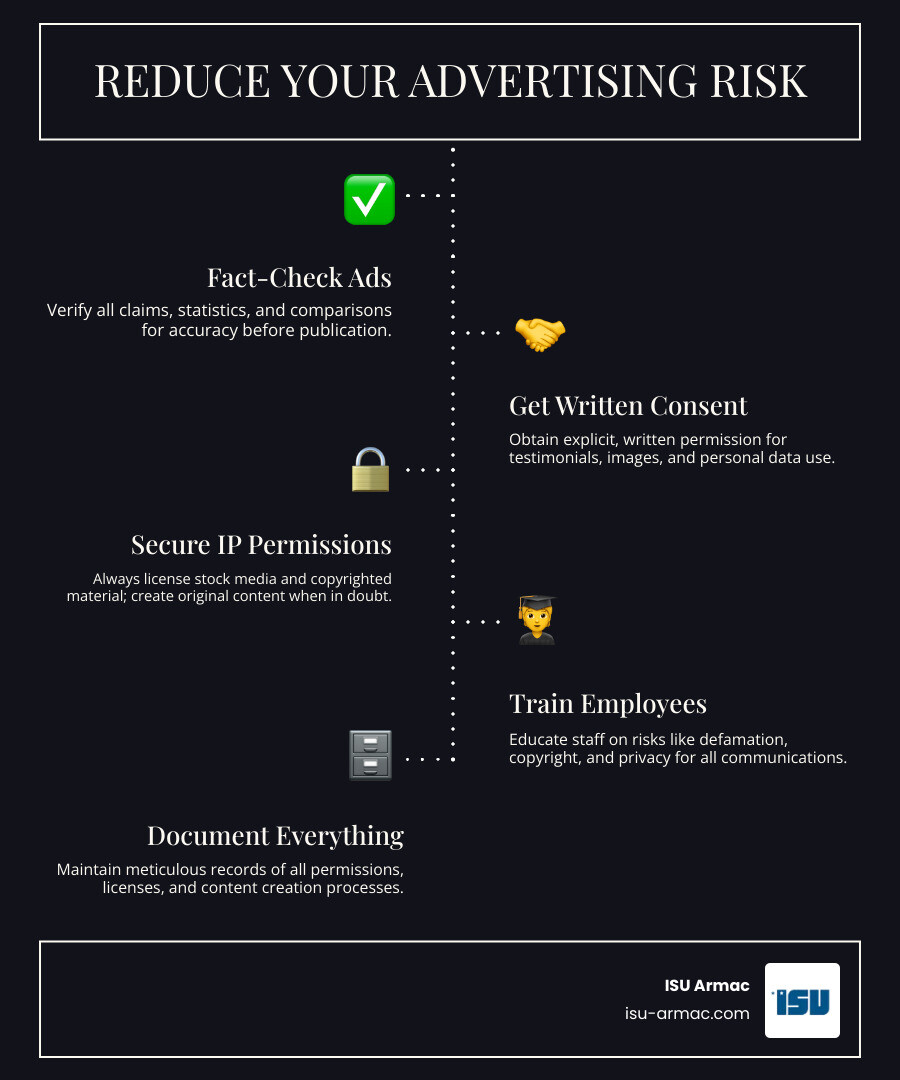
Fact-checking should be your obsession. Before anything goes public – whether it’s a social media post, website content, or traditional advertisement – verify every claim, statistic, and comparison. Even seemingly harmless statements can become problematic if they’re inaccurate or misleading.
Written consent is your best friend when it comes to using anyone’s image, name, or testimonial. That happy customer photo from your restaurant’s opening day? Make sure you have permission to use it. Consider having clear signage about photography at your business location, so customers know their images might be used for marketing purposes.
Securing proper permissions for intellectual property is non-negotiable. Never assume that image from a Google search is free to use. The licensing fees for stock photos, music, or video clips are minimal compared to the cost of defending a copyright infringement lawsuit. When in doubt, create original content or work with a professional who understands licensing requirements. For comprehensive guidance on intellectual property rights, get guidance on copyright from the Canadian Intellectual Property Office.
Employee training is crucial because your team members are extensions of your business. They need to understand that their social media posts, customer interactions, and casual comments about competitors can create liability for your company. Establish clear policies about what can and cannot be shared publicly.
Documentation saves lawsuits. Keep detailed records of all permissions obtained, licenses purchased, and content creation processes. If someone claims you’ve infringed on their rights, having thorough documentation can make the difference between a quick resolution and a prolonged legal battle.
Your marketing materials also need regular reviews. What seemed acceptable five years ago might not meet today’s standards, and laws continue to evolve. Periodically audit your website, social media profiles, and marketing materials to ensure everything remains compliant.
The goal isn’t to eliminate all risk – that’s impossible in today’s connected world. Instead, it’s about being smart and proactive while having the right personal injury advertising injury coverage in place for those situations you can’t control.
Conclusion: Secure Your Business’s Reputation and Future
In today’s hyperconnected business world, your reputation can be damaged faster than you can say “viral post.” Personal injury advertising injury coverage isn’t just another line item on your insurance policy – it’s your business’s shield against the unexpected lawsuits that can emerge from a single social media misstep, an accidentally borrowed image, or even a well-intentioned comment about a competitor.
Throughout this guide, we’ve seen how this essential protection goes far beyond traditional slip-and-fall coverage. Whether it’s copyright infringement from using an unlicensed photo, defamation claims from an employee’s careless comment, or privacy violations from customer testimonials without proper consent, these risks lurk in every aspect of modern business communication. The financial impact can be devastating – legal defense costs alone often reach tens of thousands of dollars, even when you win the case.
The key protections we’ve covered include:
- Personal injury claims like false arrest, wrongful eviction, and defamation
- Advertising injury claims covering copyright infringement and misappropriation of ideas
- Legal defense coverage for both valid and frivolous lawsuits
- Settlement and judgment protection up to your policy limits
But insurance is only part of the equation. The most successful businesses combine comprehensive personal injury advertising injury coverage with proactive risk management. This means fact-checking every claim, securing proper permissions for all content, training employees on appropriate conduct, and documenting everything you do. These simple steps can prevent many claims from happening in the first place.
At ISU-ARMAC, we’ve spent decades helping Victorville area businesses steer these complex waters. As an independent agency, we have the unique advantage of shopping multiple carriers to find you the best coverage at the most competitive rates. We understand that every business faces different risks – a marketing agency in Apple Valley has different exposures than a retail store in Hesperia, and your coverage should reflect that reality.
Your business’s reputation took years to build, but it can be damaged in minutes. Don’t let an unexpected personal injury advertising injury claim derail everything you’ve worked so hard to create. The cost of proper coverage is minimal compared to the potential financial devastation of going without it.
Ready to protect what matters most? Get a comprehensive review of your business insurance needs and find how we can help you build a stronger, more secure foundation for your business’s future success.